Blank Canvas
A design exploration into why the empty prompt creates friction and how alternative starting points can better support different ways of thinking

Team Members

Yukti Poddar

Jason Park

Cole Biehle

Hanara Nam
The Problem
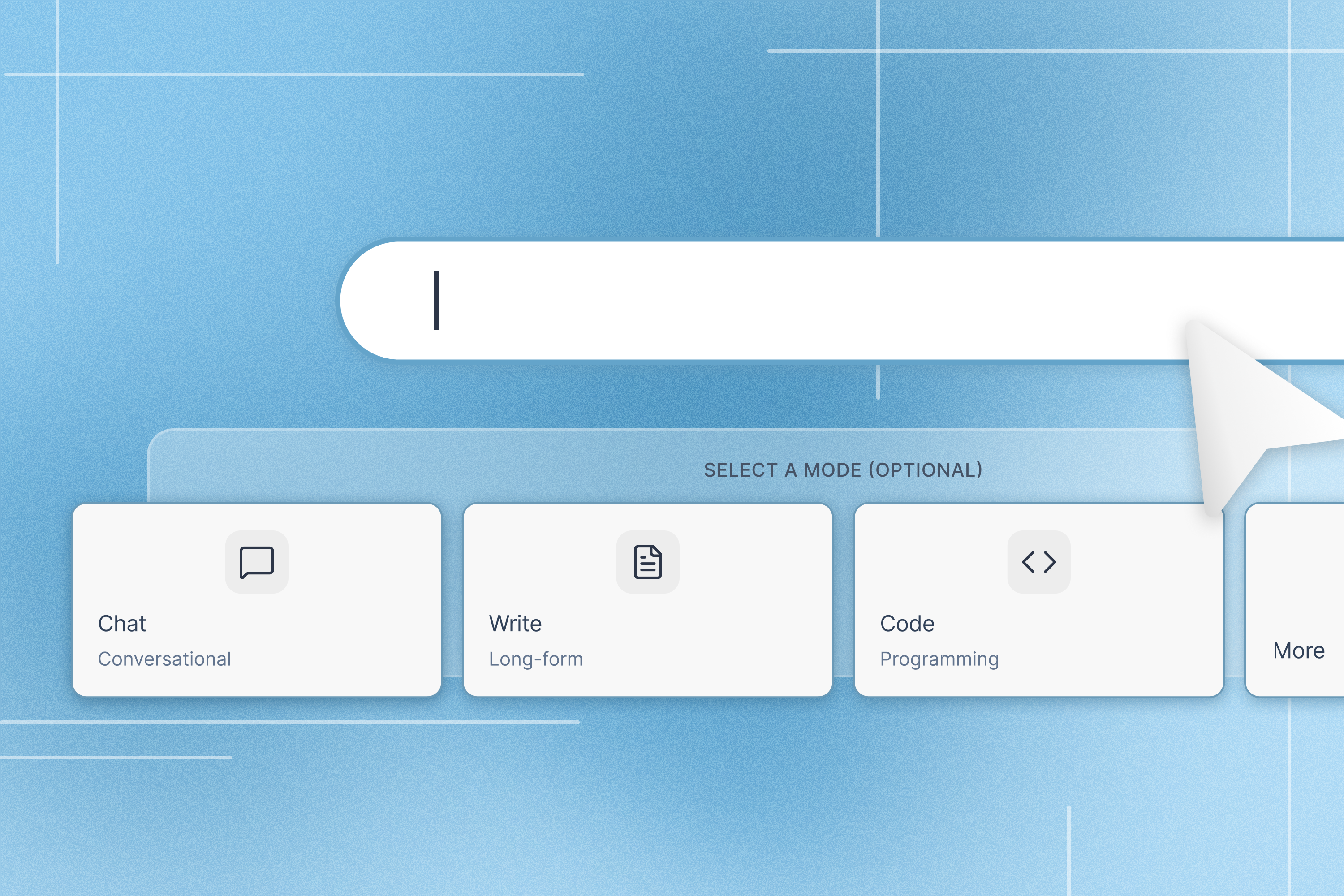
Most AI tools begin the same way: an empty input field and a blinking cursor.
For experienced users, this can feel flexible. For many others, it feels intimidating. The interface assumes users know what to ask, how to ask it, and that they are confident translating intent into a prompt.
Our research showed that this moment is not neutral. It introduces hesitation before any real work begins.
“I know what I want to do, but I don’t know how to ask it.”
“I know what I want to do, but I don’t know how to ask it.”
Academic & Secondary Research
Most AI tools begin the same way: an empty input field and a blinking cursor.
For experienced users, this can feel flexible. For many others, it feels intimidating. The interface assumes users know what to ask, how to ask it, and that they are confident translating intent into a prompt.
Our research showed that this moment is not neutral. It introduces hesitation before any real work begins.
“I know what I want to do, but I don’t know how to ask it.”
From Framing to Exploration
Most AI tools begin the same way: an empty input field and a blinking cursor.
For experienced users, this can feel flexible. For many others, it feels intimidating. The interface assumes users know what to ask, how to ask it, and that they are confident translating intent into a prompt.
Our research showed that this moment is not neutral. It introduces hesitation before any real work begins.
“I know what I want to do, but I don’t know how to ask it.”
How might we give people a clearer, more supportive starting point when they open an AI tool?
Broad exploration
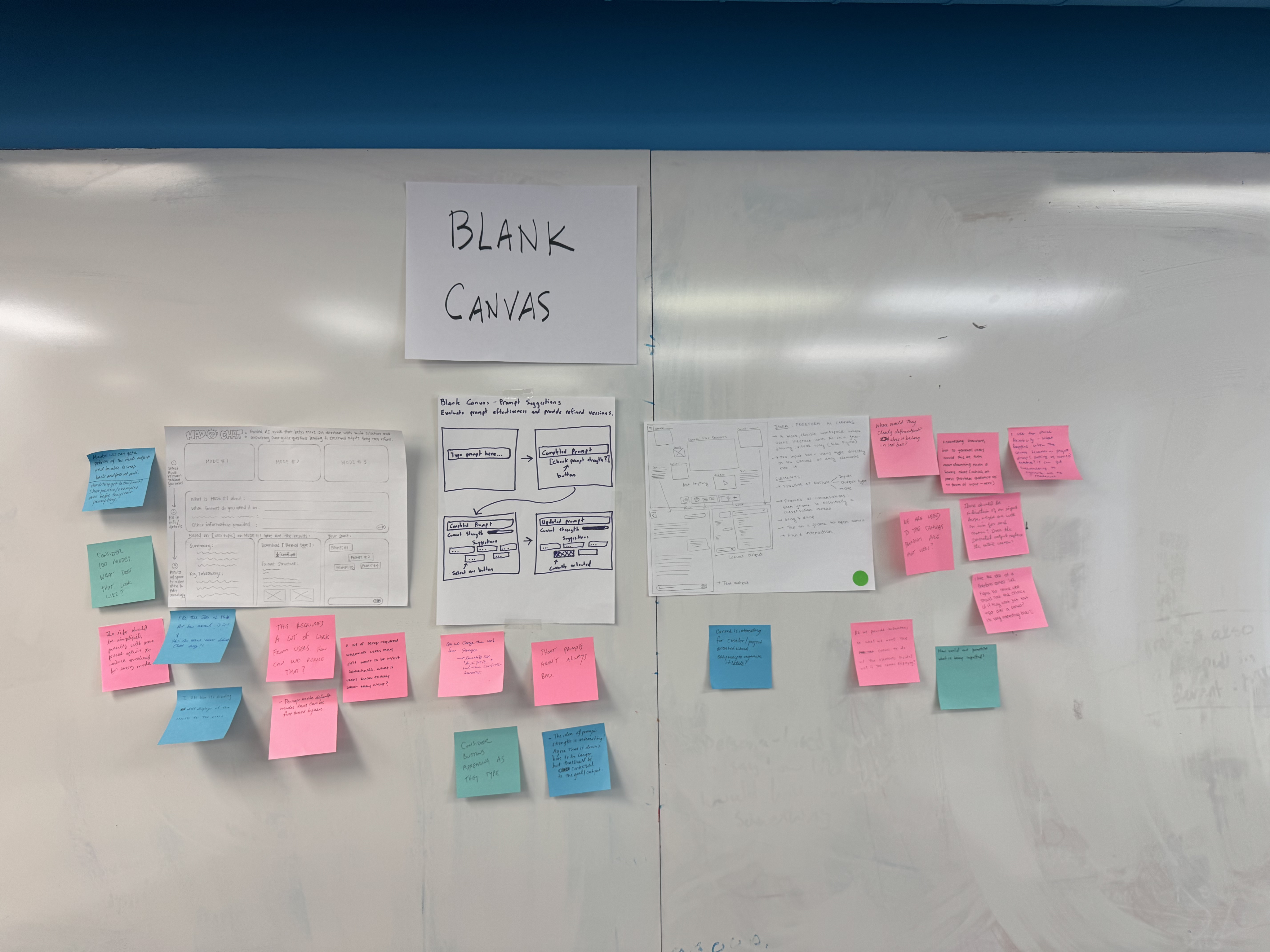
Each team member independently sketched multiple concepts that reimagined how an AI interaction could begin. These ideas ranged from structured task-based starting points to more open, visual ways of orienting before prompting.
After sharing our sketches, we discussed patterns instead of picking favorites. Clear themes emerged around structure versus exploration, helping us see that people get stuck for different reasons.
Refinement and alignment
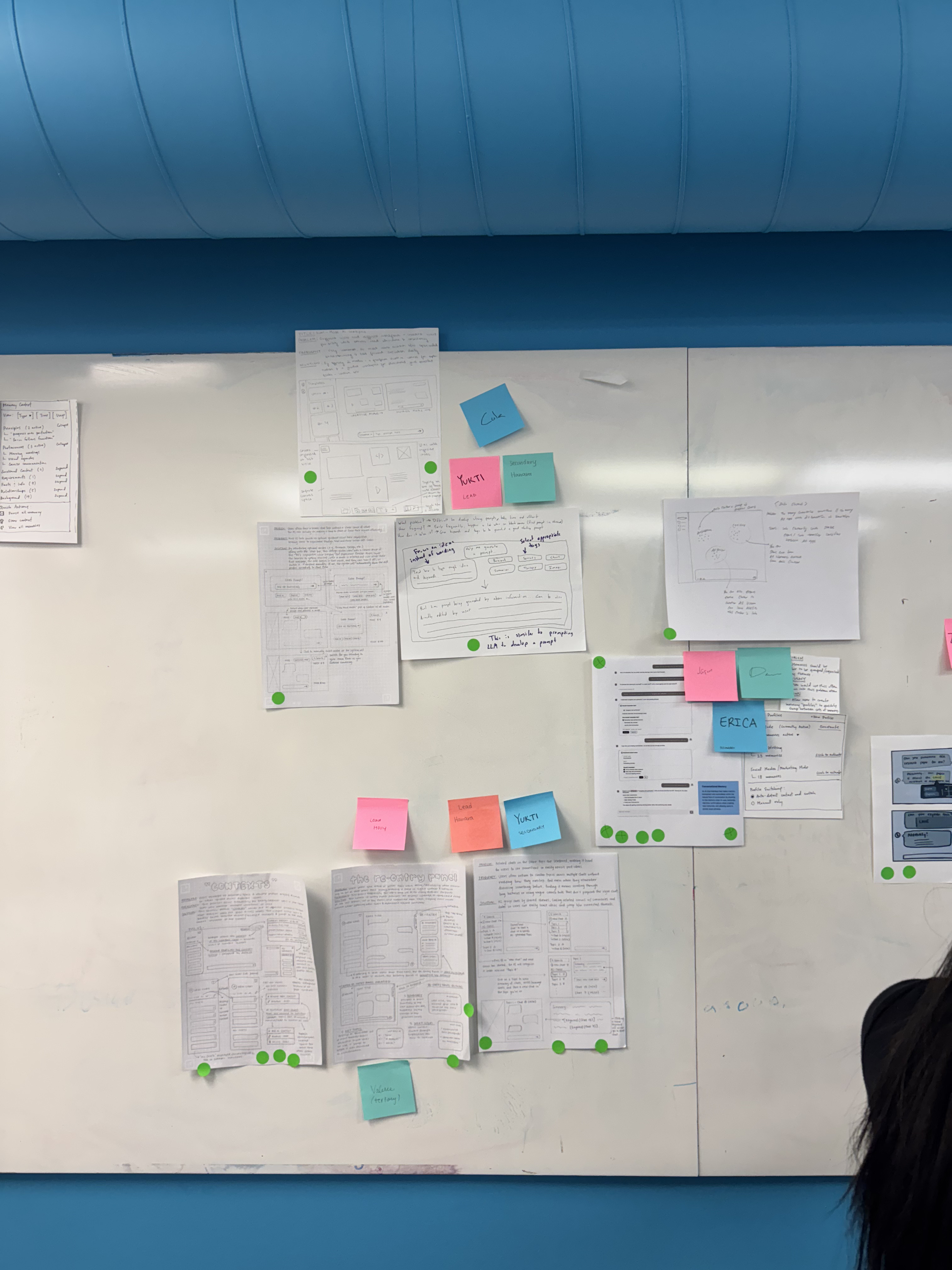
In the second round, we focused on strengthening the most promising directions. Sketches became more detailed, exploring layout, interaction flow, and how the first moment would feel.
We then aligned as a team by voting on the directions that best reflected our research insights and design goals. This process led us to two distinct concepts, each addressing a different way people approach starting work.
These directions became the foundation for our concept prototypes and testing.
Proposed Directions
From our exploration, two distinct directions emerged. Each addresses a different way people approach starting work with AI, and each rethinks the first moment from a different angle.
Some users start with intent and want structure immediately. Others start by exploring ideas before committing to a direction. Instead of forcing a single solution, we designed two distinct starting experiences.
Concept 1: Modular Interfaces
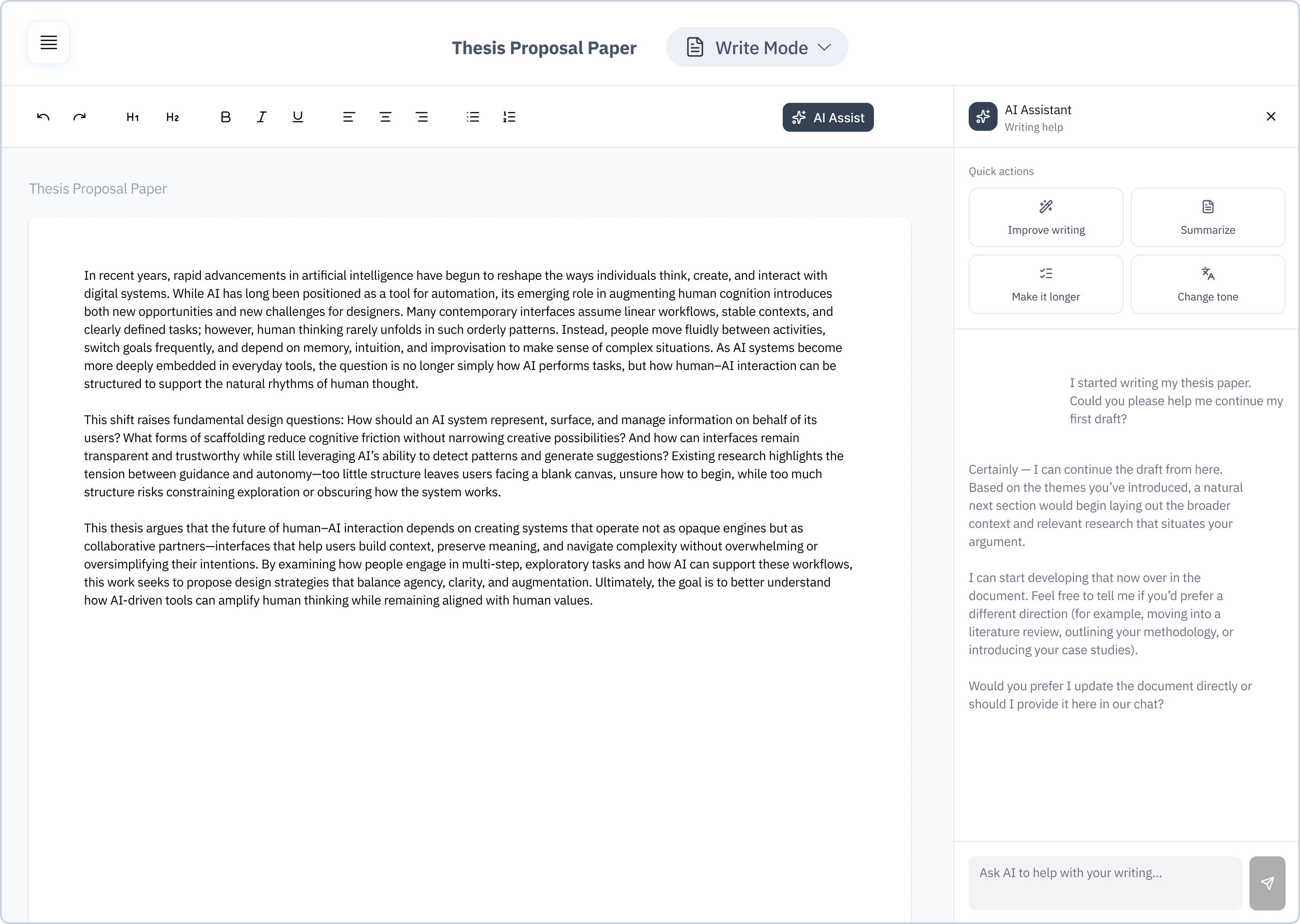
Modular Interfaces support users who know what they want to do but are unsure how to begin. Instead of a single generic chat, the interface reshapes itself around the task, signaling purpose and reducing early uncertainty.
This reframes the AI tool from an open-ended prompt into a workspace that matches user intent.
How it changes the first moment
Instead of asking users to decide what to type, Modular Interfaces help them decide what they are doing. The interface itself provides context, structure, and cues before any input is required.
Write Mode
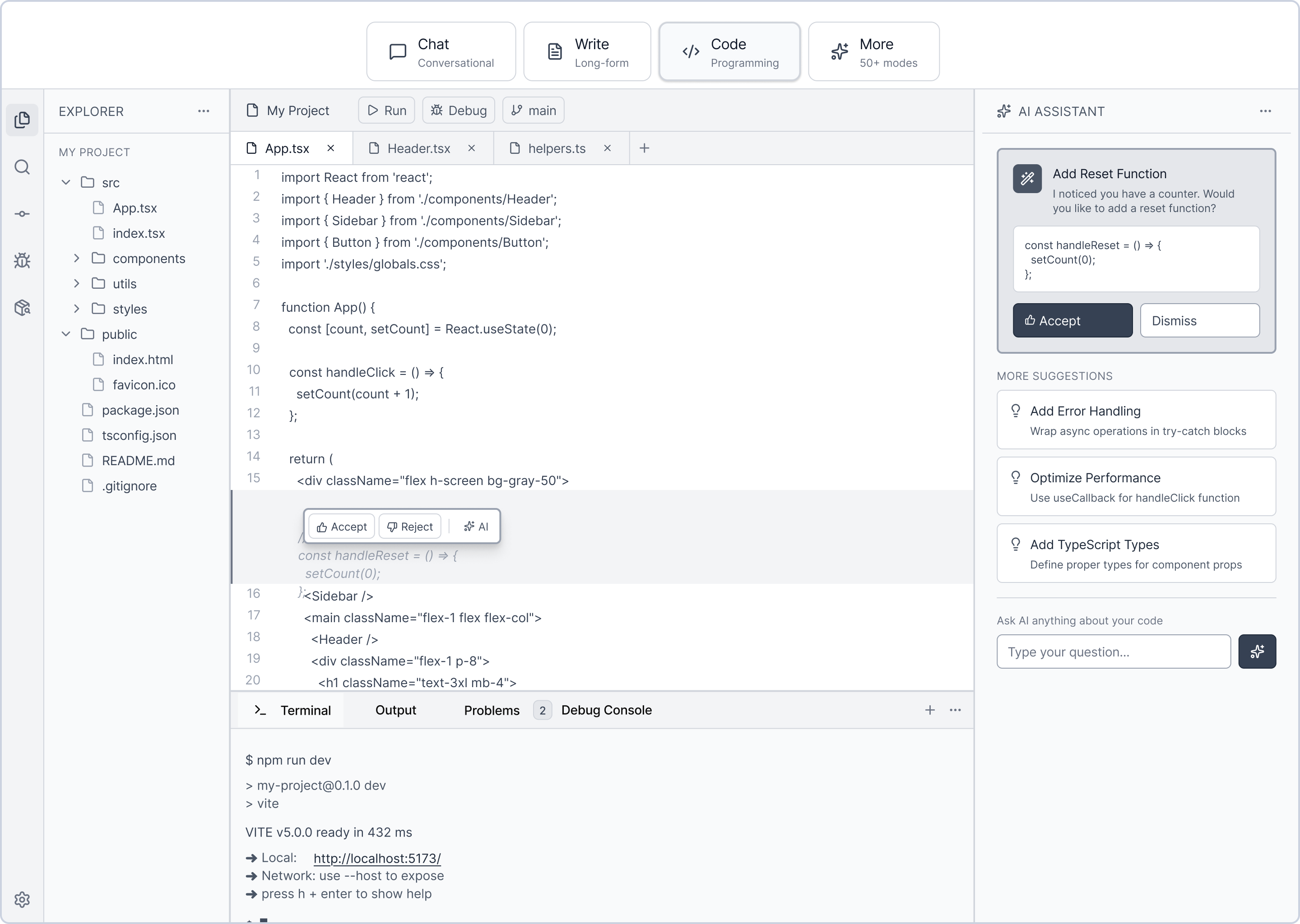
Code Mode
Prototype
User Testing Insights
We tested Modular Interfaces at the concept level to understand how they affect the first moment of starting with AI. Compared to a blank chat, users felt more confident and less pressure to phrase the “right” prompt upfront. The structure helped them move from intent to action faster, without feeling constrained.
I’m not stuck trying to phrase the perfect prompt. I can just begin.

This makes it feel okay to start without knowing exactly what to say

Most AI tools assume I already know how to talk to them. This felt like it was meeting me halfway.
Next Steps
Several participants wanted to shape the interface around their own workflows. Next, we plan to explore custom Modular Interfaces that users can create, save, and reuse, allowing the system to adapt over time.
Concept 2: Creative Canvas
Not everyone begins with a clear goal. Some people need space to wander, revisit, and reconnect ideas before deciding what to do next.
Creative Canvas supports this exploratory mindset by transforming past conversations into a navigable visual workspace. Instead of relying on prompts alone, users can browse clusters of related ideas, uncover forgotten threads, and move fluidly between focused details and broader patterns. The experience shifts AI interaction from a linear chat history to a more spatial and reflective form of exploration.
How Creative Canvas Supports Exploration
- Auto-grouped clusters based on topic and recency
- Search that jumps directly to relevant moments inside chats
- A zoomed-out view for big-picture exploration
- A focused view with a mini map for navigating within one thread
- Clear labeling so users understand why items are grouped
Prototype
User Testing Insights
Our testing revealed that many users struggled with the pressure of starting from an empty input box. Rather than knowing exactly what to ask, participants often wanted to revisit previous ideas, compare conversations, or simply browse until something clicked. Creative Canvas helped reduce that friction by making exploration feel more visual, lightweight, and intuitive.
The grouping helped me remember projects I completely forgot about.
I liked being able to zoom out and notice patterns across conversations.
This feels more like exploring my thoughts than searching through chat history.
Next Steps
This area is still evolving. We are exploring ideas like timeline-based navigation, cross-chat linking, and lightweight pinboards for ongoing work, and will refine the direction as we gather more feedback.
Why It Matters
As AI tools become more integrated into everyday workflows, the way people begin interacting with them matters just as much as the capabilities themselves. The blank prompt has become the default starting point, but our exploration showed that a single interface cannot support every way of thinking.
By reimagining the first moment through structure and exploration, we explored how AI experiences can feel more supportive, adaptive, and approachable, especially for users who may not know exactly how to begin.
Reflection
This project reinforced how much weight the first moment of an interface carries. Small defaults quietly shape confidence, behavior, and trust. As AI tools become more integrated into everyday workflows, the way people begin interacting with them matters just as much as the capabilities themselves.
By focusing on how people begin, rather than assuming they are ready to prompt, we uncovered opportunities to rethink AI interfaces beyond the chat box. Through research, exploration, and concept testing, we explored how different starting experiences can better support different ways of thinking, whether structured and goal-driven or exploratory and open-ended.

Blank Canvas
A design exploration into why the empty prompt creates friction and how alternative starting points can better support different ways of thinking
Team Members
Yukti Poddar
Jason Park
Cole Biehle
Hanara Nam
The Problem
Most AI tools begin the same way: an empty input field and a blinking cursor.
For experienced users, this can feel flexible. For many others, it feels intimidating. The interface assumes users know what to ask, how to ask it, and that they are confident translating intent into a prompt.
Our research showed that this moment is not neutral. It introduces hesitation before any real work begins.
“I know what I want to do, but I don’t know how to ask it.”
Academic & Secondary Research
Before designing, we reviewed academic research across human–computer interaction, creativity studies, and cognitive psychology.
Research on the blank page effect shows that unstructured starting points increase cognitive load and delay action. Studies also suggest that constraints and scaffolding can reduce anxiety and support creative momentum, especially for novice users.
Relevant findings included:
- Users hesitate longer when faced with open-ended inputs
- Structure can increase perceived confidence and task clarity
- Spatial organization improves recall and sensemaking in complex work
This research reframed the problem. The issue was not poor prompting skills, but how the interface framed the first moment of interaction.
From Framing to Exploration
Synthesizing insights from academic research led us to a central design question. To explore this question, we moved quickly into visual thinking. Rather than committing to a single idea, we used structured sketching to expand the solution space and align as a team.
How might we give people a clearer, more supportive starting point when they open an AI tool?
Broad exploration
Each team member independently sketched multiple concepts that reimagined how an AI interaction could begin. These ideas ranged from structured task-based starting points to more open, visual ways of orienting before prompting.
After sharing our sketches, we discussed patterns instead of picking favorites. Clear themes emerged around structure versus exploration, helping us see that people get stuck for different reasons.
Refinement and alignment
In the second round, we focused on strengthening the most promising directions. Sketches became more detailed, exploring layout, interaction flow, and how the first moment would feel.
We then aligned as a team by voting on the directions that best reflected our research insights and design goals. This process led us to two distinct concepts, each addressing a different way people approach starting work.
These directions became the foundation for our concept prototypes and testing.
Proposed Directions
From our exploration, two distinct directions emerged. Each addresses a different way people approach starting work with AI, and each rethinks the first moment from a different angle.
Some users start with intent and want structure immediately. Others start by exploring ideas before committing to a direction. Instead of forcing a single solution, we designed two distinct starting experiences.
Concept 1: Modular Interfaces
Modular Interfaces support users who know what they want to do but are unsure how to begin. Instead of a single generic chat, the interface reshapes itself around the task, signaling purpose and reducing early uncertainty.
This reframes the AI tool from an open-ended prompt into a workspace that matches user intent.
How it changes the first moment
Instead of asking users to decide what to type, Modular Interfaces help them decide what they are doing. The interface itself provides context, structure, and cues before any input is required.
Write Mode
Code Mode
Prototype
User Testing Insights
We tested Modular Interfaces at the concept level to understand how they affect the first moment of starting with AI. Compared to a blank chat, users felt more confident and less pressure to phrase the “right” prompt upfront. The structure helped them move from intent to action faster, without feeling constrained.
Next Steps
Several participants wanted to shape the interface around their own workflows. Next, we plan to explore custom Modular Interfaces that users can create, save, and reuse, allowing the system to adapt over time.
Concept 2: Creative Canvas
Not everyone begins with a clear goal. Some people need space to wander, revisit, and reconnect ideas before deciding what to do next.
Creative Canvas supports this exploratory mindset by transforming past conversations into a navigable visual workspace. Instead of relying on prompts alone, users can browse clusters of related ideas, uncover forgotten threads, and move fluidly between focused details and broader patterns. The experience shifts AI interaction from a linear chat history to a more spatial and reflective form of exploration.
How Creative Canvas Supports Exploration
- Auto-grouped clusters based on topic and recency
- Search that jumps directly to relevant moments inside chats
- A zoomed-out view for big-picture exploration
- A focused view with a mini map for navigating within one thread
- Clear labeling so users understand why items are grouped
Prototype
User Testing Insights
Our testing revealed that many users struggled with the pressure of starting from an empty input box. Rather than knowing exactly what to ask, participants often wanted to revisit previous ideas, compare conversations, or simply browse until something clicked. Creative Canvas helped reduce that friction by making exploration feel more visual, lightweight, and intuitive.
Next Steps
This area is still evolving. We are exploring ideas like timeline-based navigation, cross-chat linking, and lightweight pinboards for ongoing work, and will refine the direction as we gather more feedback.
Why It Matters
As AI tools become more integrated into everyday workflows, the way people begin interacting with them matters just as much as the capabilities themselves. The blank prompt has become the default starting point, but our exploration showed that a single interface cannot support every way of thinking.
By reimagining the first moment through structure and exploration, we explored how AI experiences can feel more supportive, adaptive, and approachable, especially for users who may not know exactly how to begin.
Reflection
This project reinforced how much weight the first moment of an interface carries. Small defaults quietly shape confidence, behavior, and trust. As AI tools become more integrated into everyday workflows, the way people begin interacting with them matters just as much as the capabilities themselves.
By focusing on how people begin, rather than assuming they are ready to prompt, we uncovered opportunities to rethink AI interfaces beyond the chat box. Through research, exploration, and concept testing, we explored how different starting experiences can better support different ways of thinking, whether structured and goal-driven or exploratory and open-ended.